
FAQs
Frequently Asked Questions and Answers

Turkey has become an increasingly attractive destination for international students due to its structured academic system, affordable tuition, and alignment with European education standards. The study system in Turkey is regulated by the Council of Higher Education (YÖK) and follows the Bologna Process, ensuring compatibility with universities across Europe.
This guide explains how the Turkish higher education system works, including degree structure, credit system, academic calendar, grading, and study modes.

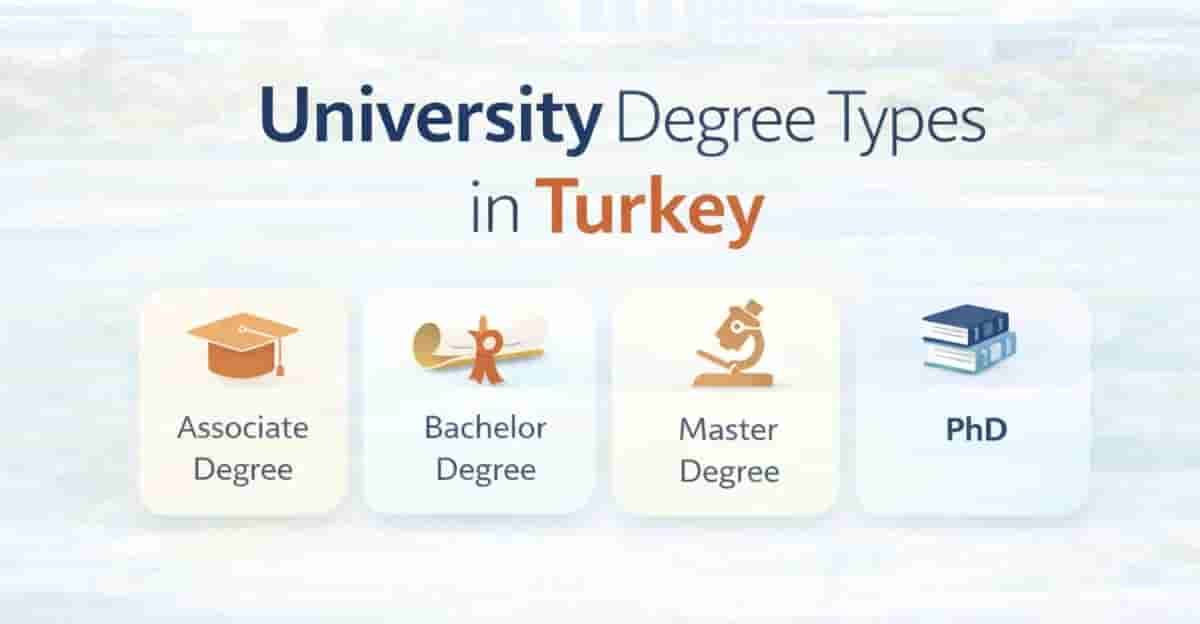
Turkey follows a three-cycle higher education model similar to most European countries.
Duration: 2 years
Focused on vocational and practical training.
Duration: 4 years
Standard undergraduate programs in fields such as business, engineering, social sciences, and arts.
Certain programs require longer study periods:
Medicine: 6 years
Dentistry: 5 years
Pharmacy: 5 years
Architecture & Engineering (some fields): 4–5 years
Duration: 1.5 to 2 years
Available with thesis (research-based) or non-thesis (course-based).
Duration: 3 to 5 years
Focused on advanced research and dissertation work.

Turkey uses the European Credit Transfer and Accumulation System (ECTS).
1 academic year = 60 ECTS credits
Bachelor’s degree = 240 ECTS
Master’s degree = 90–120 ECTS
This system allows students to transfer credits more easily between European institutions and supports international academic mobility.
Most universities operate on a semester-based system:
Fall Semester: September – January
Spring Semester: February – June
Summer School (optional): June – August
Each semester usually includes 14 weeks of lectures followed by exam periods.

Programs in Turkey are offered in:
Turkish
English
Sometimes bilingual formats
Many universities provide fully English-taught programs, particularly at the graduate level.
Students studying in Turkish may need to provide proof of language proficiency or complete a preparatory language year.
Students are typically evaluated through:
Midterm exams
Final exams
Assignments and projects
Class participation
Most universities use a 4.00 GPA grading scale.
A common grading structure:
AA (90–100)
BA (85–89)
BB (80–84)
CC (70–74)
FF (Fail)
Attendance requirements usually range from 70% to 80%, depending on the course type.
The Turkish higher education system offers different study formats:
Traditional face-to-face instruction.
Combination of online and in-person classes.
Programs delivered fully or partially online, especially at the graduate level.
Digital learning has expanded significantly in recent years, providing flexibility for working professionals and international students.
Admission requirements vary by level:
High school diploma
University entrance exam or international equivalent
Language proficiency (if required)
Bachelor’s degree
Minimum GPA requirement
Sometimes an interview or statement of purpose
International students can apply easily and securely through StudyLeo.
European-compatible credit system (ECTS)
Affordable tuition compared to Western Europe
Growing number of English programs
Flexible study options
International student-friendly policies
Turkey combines academic structure with accessibility, making it a strong option for students seeking quality education at a competitive cost.

Whether you are pursuing an undergraduate degree, a master’s program, or advanced research, the Turkish higher education framework provides clear progression pathways and recognized qualifications. For international students in particular, it presents a competitive option that combines European standards with affordable tuition and flexible study opportunities.
Frequently Asked Questions and Answers
Look out blogs and aware of the latest trends and updates
Explore top universities offering quality education, modern facilities, and diverse academic opportunities for students worldwide






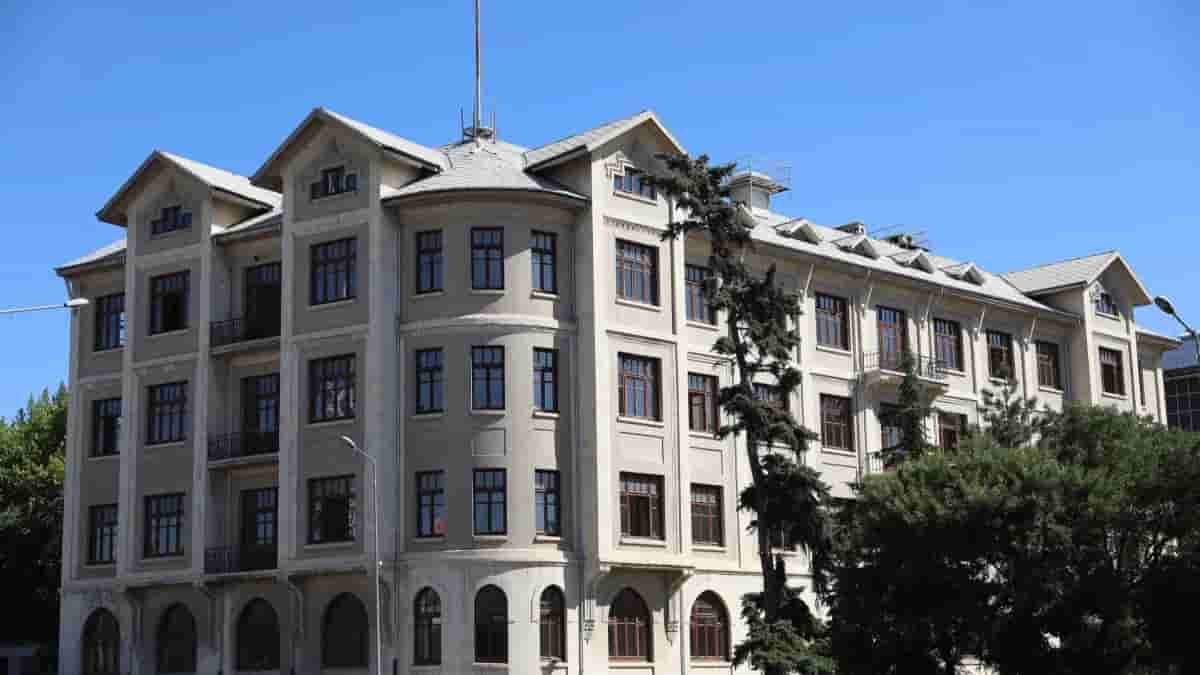 Dormitory
Ankara, Turkey
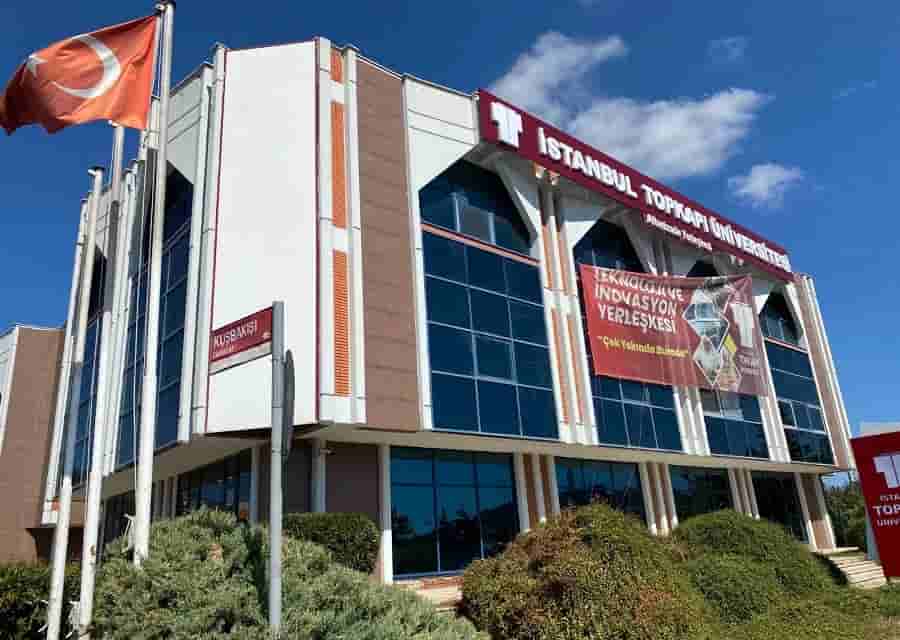 Dormitory
Istanbul, Turkey
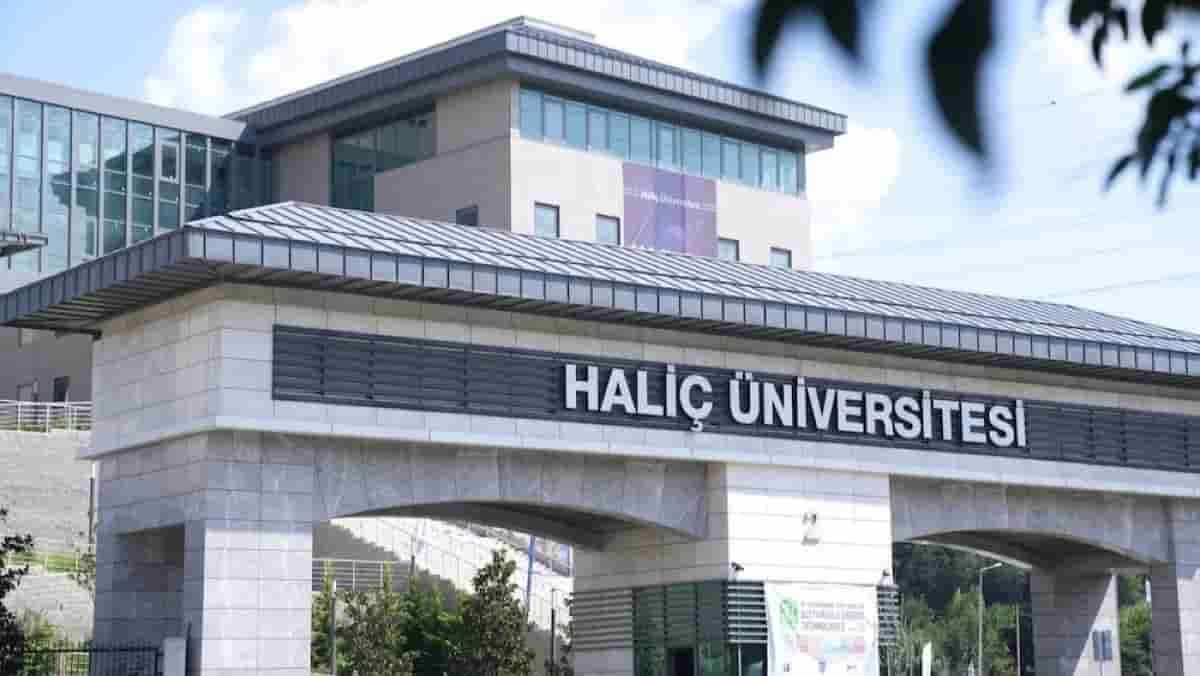 Dormitory
Istanbul, Turkey
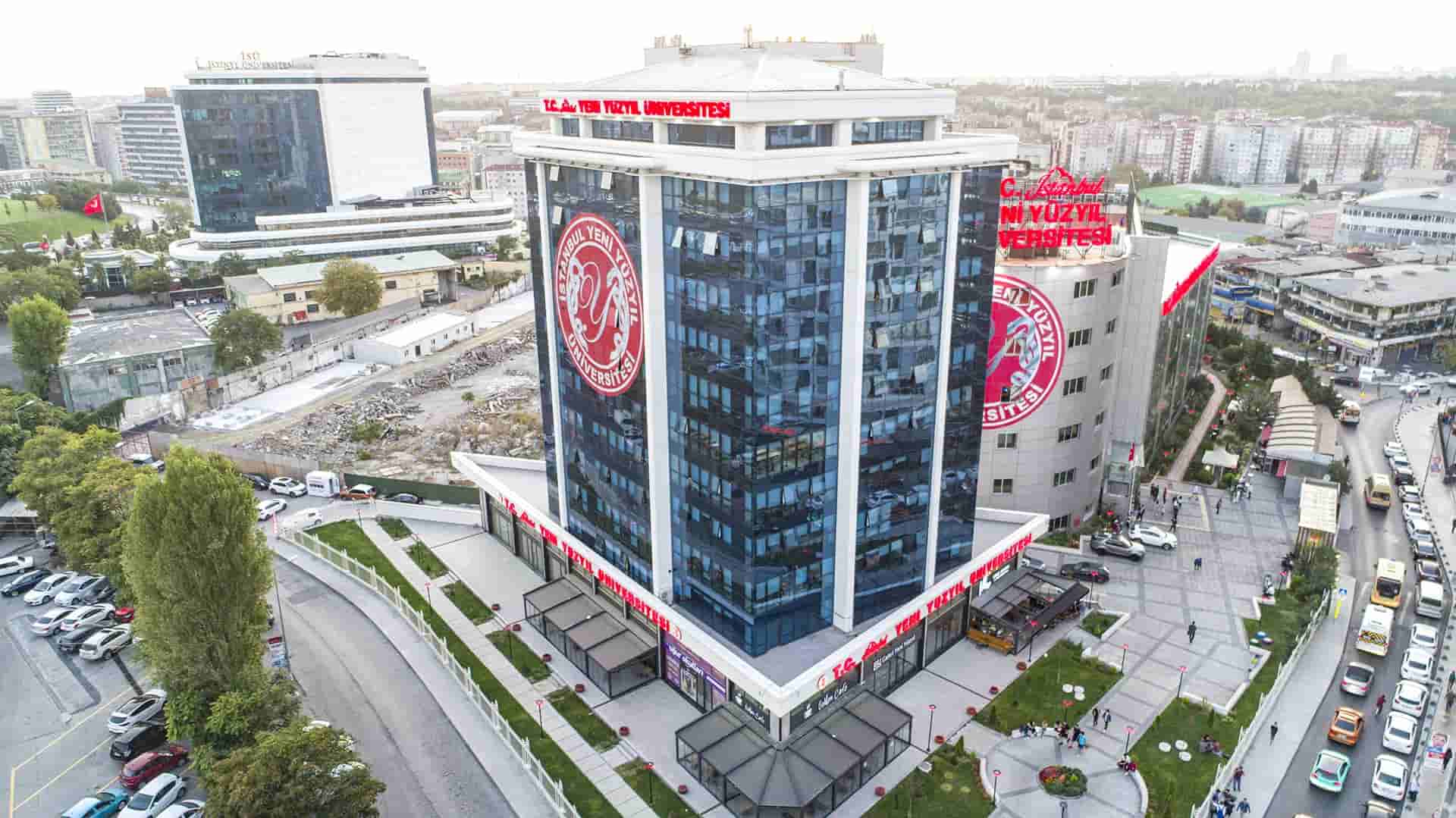 Dormitory
Istanbul, Turkey
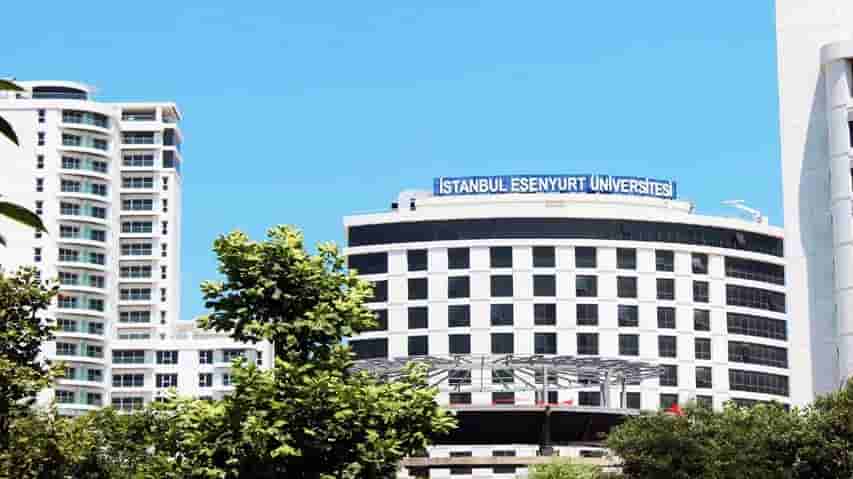 Dormitory
Istanbul, Turkey
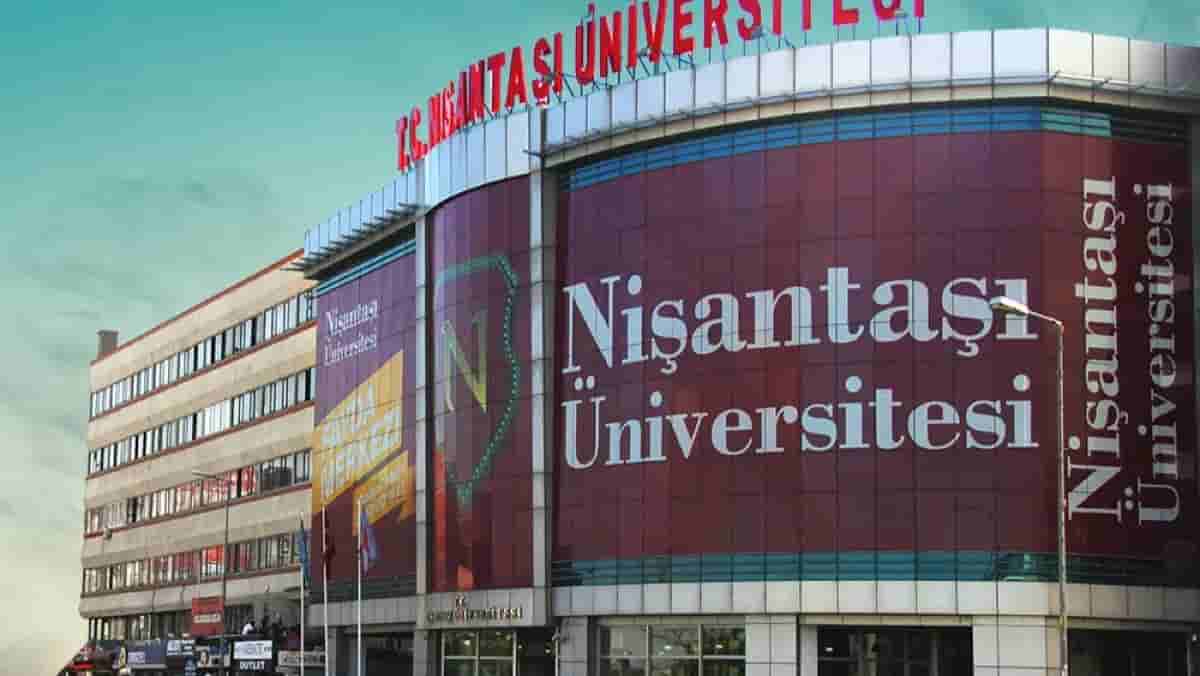 Dormitory
Istanbul, Turkey
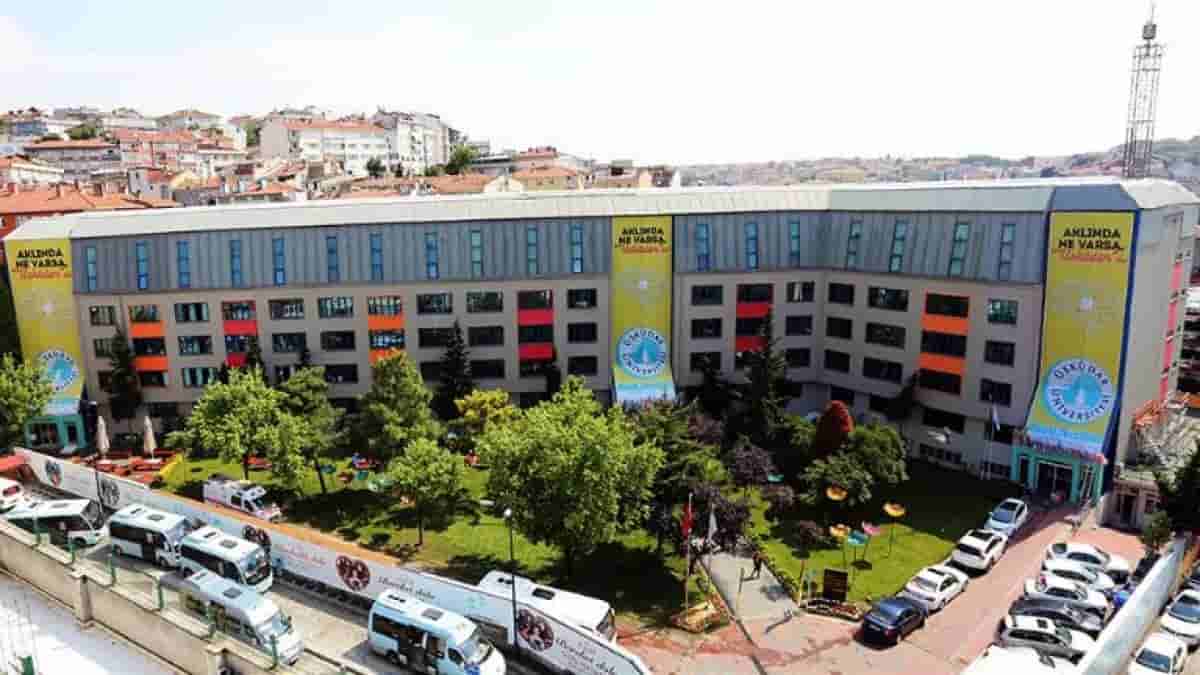 Dormitory
Istanbul, Turkey
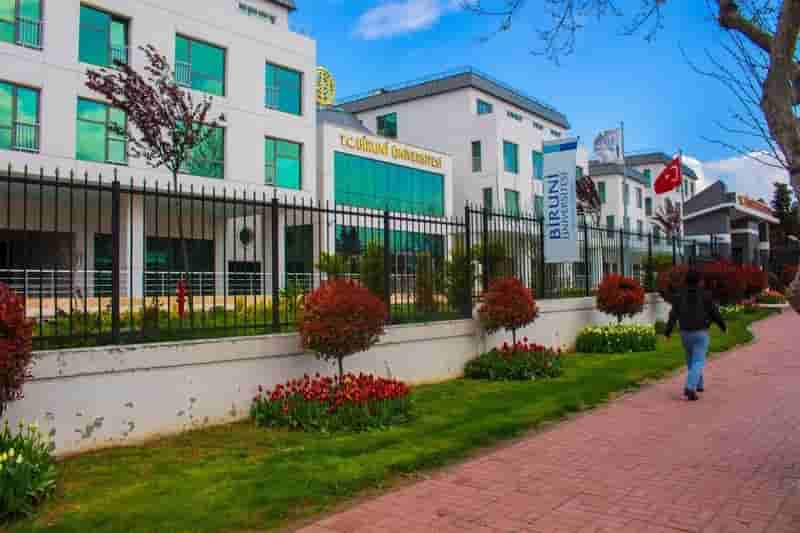 Dormitory
Istanbul, Turkey
 Dormitory
Istanbul, Turkey
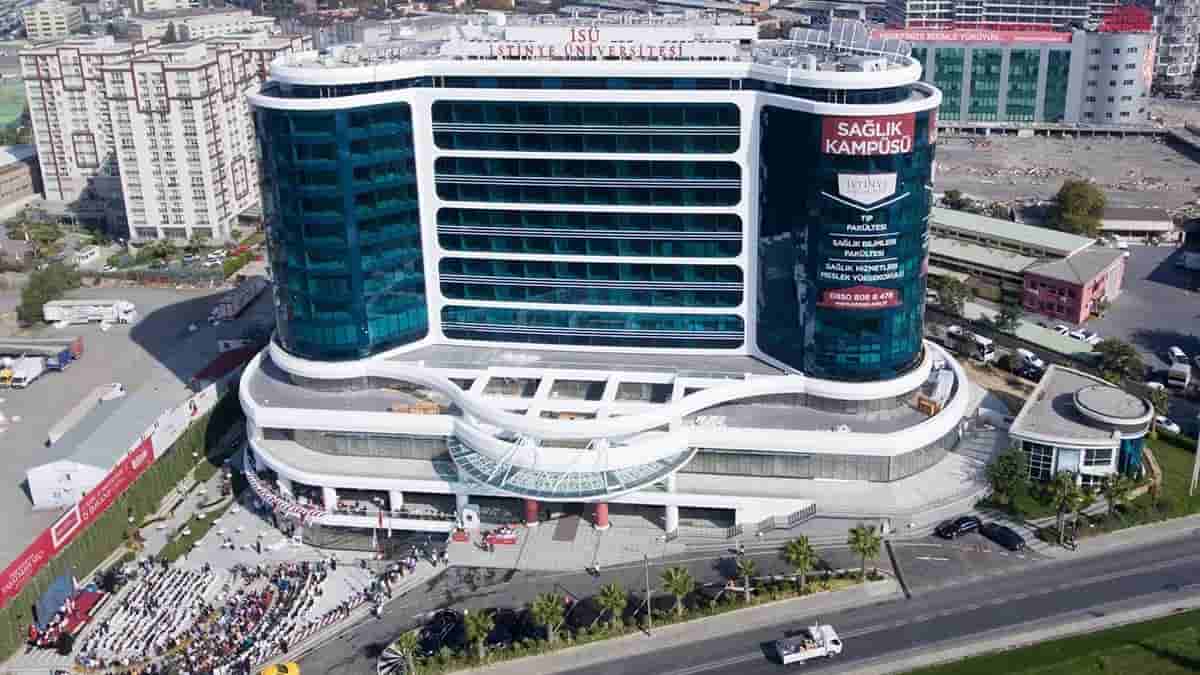 Dormitory
Istanbul, Turkey
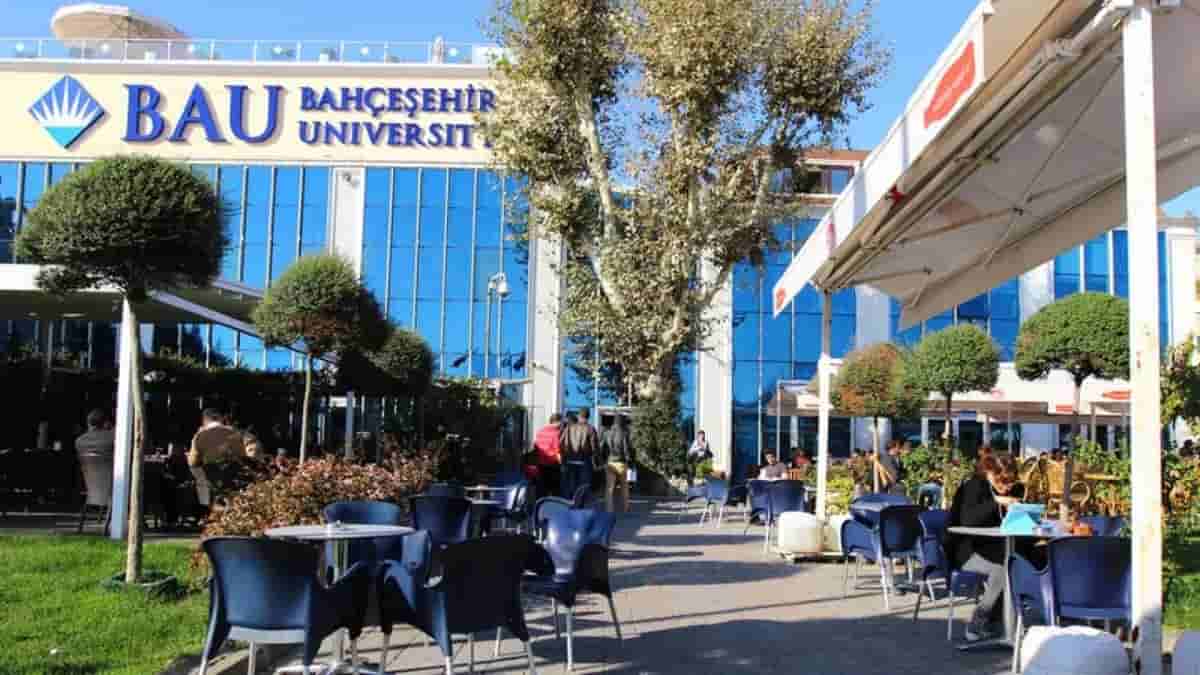 Dormitory
Istanbul, Turkey
 Dormitory
Istanbul, Turkey
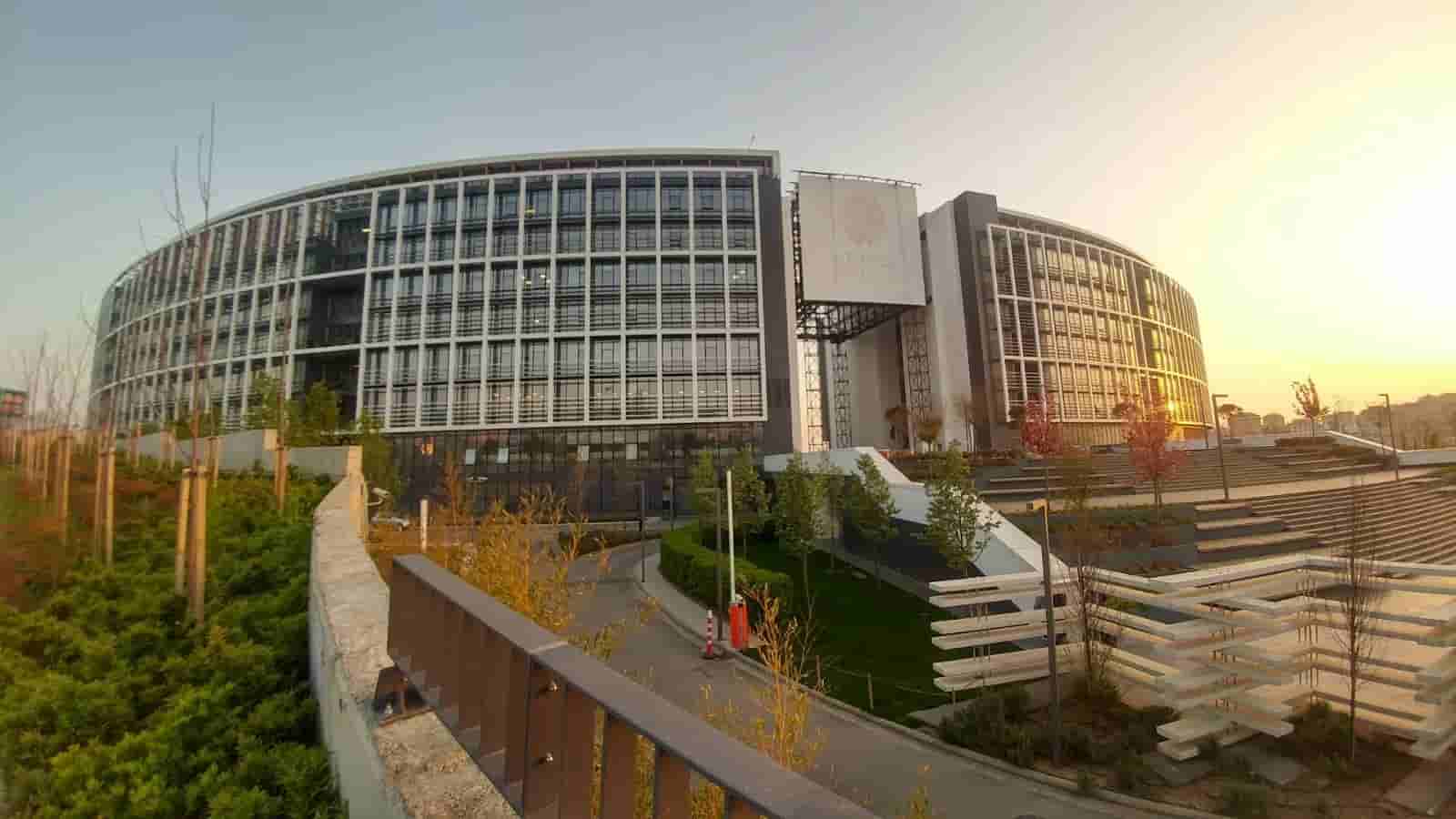 Dormitory
Istanbul, Turkey
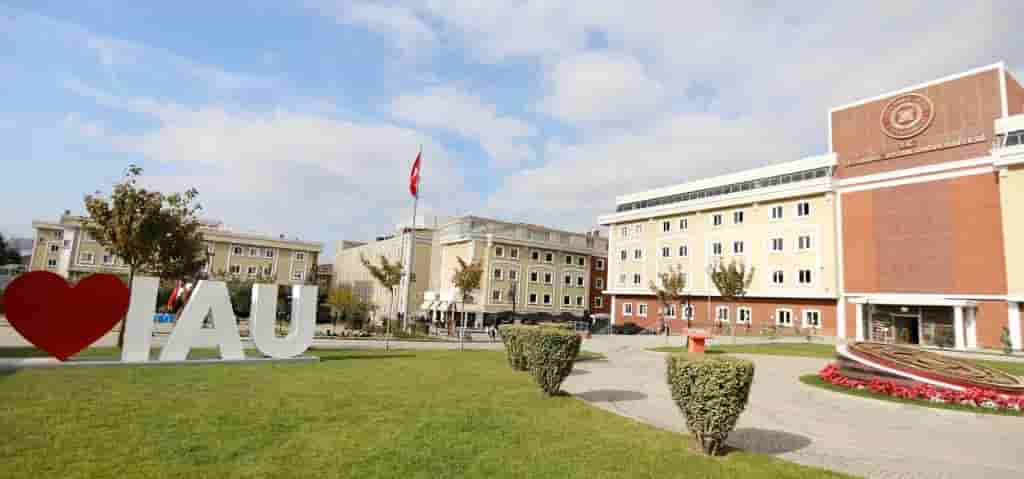 Dormitory
Istanbul, Turkey
 Dormitory
Istanbul, Turkey
 Dormitory
Istanbul, Turkey
 Dormitory
Antalya, Turkey
 Dormitory
Istanbul, Turkey
 Dormitory
Ankara, Turkey
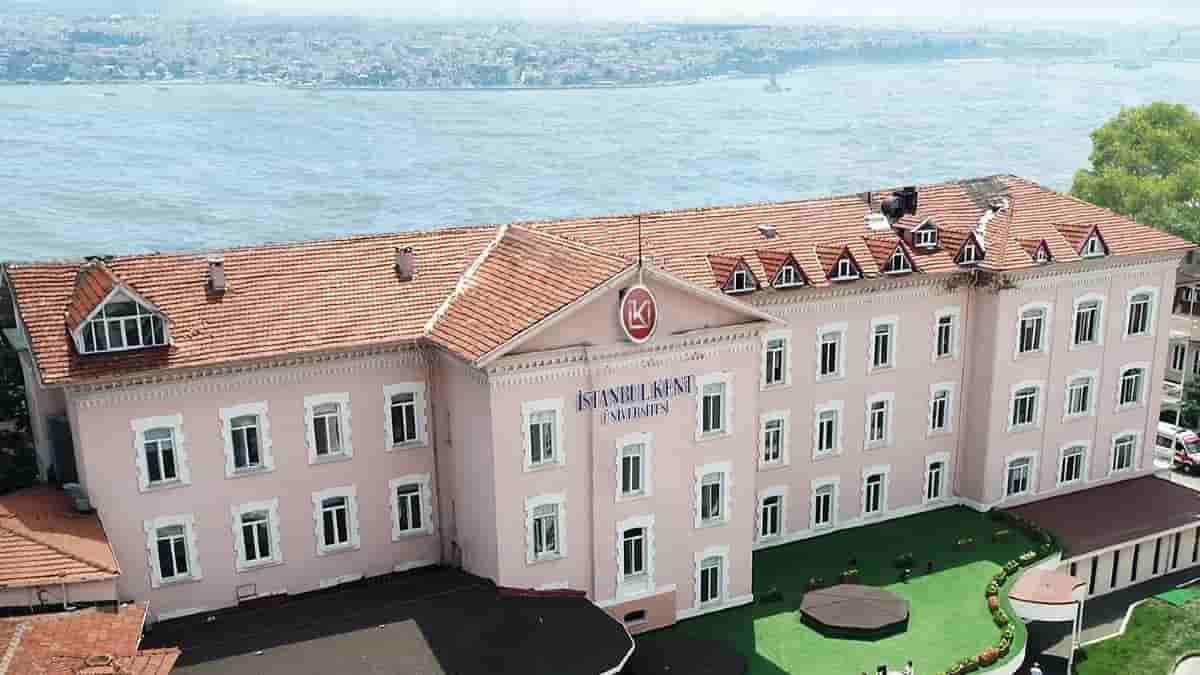 Dormitory
Istanbul, Turkey