




FAQs
Frequently Asked Questions and Answers
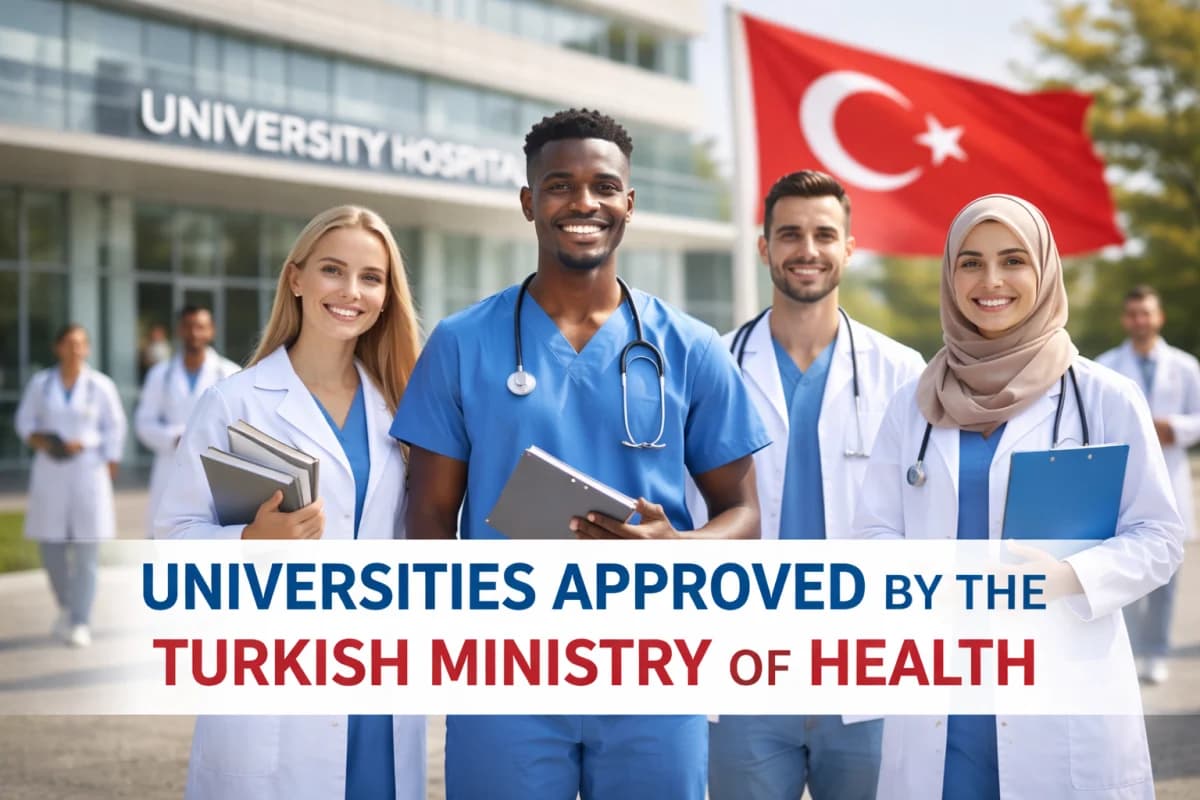
Universities approved by the Turkish Ministry of Health play a central role in training future doctors, dentists, pharmacists, and allied health professionals. In Turkey, private foundation universities that offer health programs must operate under strict national regulations. Their medical faculties and teaching hospitals are subject to oversight by the Ministry of Health, particularly in clinical training environments.
Private universities in Turkey operate under the supervision of the Council of Higher Education. Health related faculties must also comply with standards defined by the Turkish Ministry of Health, especially for clinical education. Medical and dental programs are required to conduct practical training in hospitals that are officially authorized to deliver healthcare services. The Ministry of Health evaluates whether university hospitals meet national service and safety criteria. These hospitals must have sufficient patient flow, qualified specialists, and modern medical infrastructure.

Several private foundation universities operate medical faculties that collaborate with Ministry approved hospitals. Examples include Acibadem Mehmet Ali Aydinlar University, Istanbul Medipol University, Istinye University, Biruni University, and Bezmialem Vakif University. These institutions maintain fully functioning training hospitals recognized by the national health authority.
Clinical education depends on exposure to diverse medical cases. Ministry approved hospitals must demonstrate sufficient patient volume across departments such as cardiology, oncology, orthopedics, and emergency medicine. This ensures that students encounter a wide range of conditions during their training.
Beyond Ministry approval, many private medical faculties pursue national and international accreditation. In Turkey, medical education programs may be evaluated by independent accreditation boards aligned with global standards. These reviews assess curriculum design, faculty qualifications, research output, and clinical training systems.
Students considering Ministry aligned private universities should focus on measurable indicators.
Key evaluation points include:
• Existence of a fully operational university hospital
• Official authorization of that hospital by the Ministry of Health
• Faculty to student ratio in clinical years
• Diversity of medical departments
• Research activity and academic publications
These criteria directly influence the depth of clinical exposure and academic mentorship. Careful comparison of these elements helps avoid superficial decisions based only on reputation or marketing.
Medical education in Turkey typically spans six years. The first three years focus on foundational sciences such as anatomy, physiology, pathology, and pharmacology. The final three years emphasize hospital based clinical practice under specialist supervision. During the internship year, students rotate through core departments including internal medicine, surgery, obstetrics, pediatrics, and emergency care. Ministry oversight ensures that internship training meets national competency standards.
Ministry supervision enhances academic security. Students benefit from standardized clinical protocols and structured evaluation systems. Teaching hospitals operate under national healthcare regulations, which improves patient safety and procedural consistency. Graduates from these institutions meet the professional training requirements defined by Turkish health authorities. This structured system supports both domestic employment and further specialization pathways. Strong hospital integration also increases practical readiness at the time of graduation.

International students seeking admission to private health faculties can complete their application through the StudyLeo platform at no service fee charge. StudyLeo coordinates directly with universities and ensures document accuracy and eligibility verification. This structured guidance reduces administrative errors and accelerates evaluation timelines. StudyLeo also assists in comparing tuition structures, program language options, and hospital affiliations.
Students should adopt a strategic selection process rather than focusing solely on tuition costs.
Key approaches include:
• Reviewing hospital accreditation status
• Evaluating clinical department diversity
• Comparing research infrastructure
• Analyzing graduate specialization success
• Confirming Ministry authorized clinical partnerships
Long term career planning must guide the decision. Institutions with strong hospital networks and academic output provide greater professional flexibility. Evidence based comparison protects students from incomplete or misleading information.
Private universities in Turkey that operate under the supervision of the Turkish Ministry of Health offer structured and regulated medical education. Their teaching hospitals must comply with national healthcare standards, ensuring meaningful clinical exposure.Applying through the StudyLeo platform provides organized guidance and eliminates service fees.
Frequently Asked Questions and Answers
Look out blogs and aware of the latest trends and updates
Explore top universities offering quality education, modern facilities, and diverse academic opportunities for students worldwide






 Dormitory
Ankara, Turkey
 Dormitory
Istanbul, Turkey
 Dormitory
Istanbul, Turkey
 Dormitory
Istanbul, Turkey
 Dormitory
Istanbul, Turkey
 Dormitory
Istanbul, Turkey
 Dormitory
Istanbul, Turkey
 Dormitory
Istanbul, Turkey
 Dormitory
Istanbul, Turkey
 Dormitory
Istanbul, Turkey
 Dormitory
Istanbul, Turkey
 Dormitory
Istanbul, Turkey
 Dormitory
Istanbul, Turkey
 Dormitory
Istanbul, Turkey
 Dormitory
Istanbul, Turkey
 Dormitory
Istanbul, Turkey
 Dormitory
Antalya, Turkey
 Dormitory
Istanbul, Turkey
 Dormitory
Ankara, Turkey
 Dormitory
Istanbul, Turkey