

FAQs
Frequently Asked Questions and Answers

Which universities in Turkey actually rank higher, and what do those rankings truly measure?
Rankings are more than numbers. They reflect research strength, faculty quality, and graduate outcomes. Understanding these indicators helps you compare private universities based on measurable academic performance rather than assumptions.
• Rankings reflect academic performance and program strength
• Higher ranked institutions improve global recognition
• Clear tuition ranges support realistic budgeting
• Early document preparation prevents delays
• Strategic selection aligns study plans with career goals
University rankings are based on specific, weighted metrics used by global bodies like QS and Times Higher Education (THE). These organizations evaluate institutions primarily on research citations, which measure how often a university’s scientific work is referenced by other scholars globally.
Faculty credentials also play a vital role, specifically the ratio of PhD-holding academics to the student population. For professional degrees, rankings weigh employer reputation, which tracks how international recruiters perceive the readiness of a university's graduates.

Students choose Turkey for a balance of quality and affordability. Many private universities offer English medium programs. Tuition is often lower than Western Europe or North America.
• Strategic location between Europe and Asia
• International academic networks
• Competitive tuition structures
• Increasing visibility in global rankings
This combination makes Turkey a practical academic destination.
Seek quality education supported by measurable institutional performance.
Are prepared to adapt to a multicultural academic environment.
Understand language and academic readiness requirements.
Want internationally recognized degrees that enhance career prospects.
This pathway may be less suitable for students who prefer highly subsidized education, entirely familiar environments, or are unwilling to commit to long-term planning. Rankings-based decisions focus on measurable quality and strategic value rather than convenience or anecdotal advice.

Several private institutions consistently perform well in rankings and attract international students. In Istanbul, universities such as İstanbul Bilgi Üniversitesi, Yeditepe Üniversitesi and İstanbul Medipol Üniversitesi stand out. Ankara hosts Başkent Üniversitesi and Ankara Medipol Üniversitesi, while İzmir offers Yaşar Üniversitesi and İzmir Kavram Meslek Yüksekokulu. Other notable private universities include Bahçeşehir Üniversitesi, İstanbul Aydın Üniversitesi, and İstanbul Kültür Üniversitesi. Programs across engineering, business, medicine, and social sciences are available, with English-medium curricula common in highly ranked institutions. Using rankings helps prioritize universities with the best combination of program quality and graduate outcomes.
Through StudyLeo, you can review verified global and national ranking data for each university. QS World and Times Higher Education positions are clearly presented for transparent comparison. This allows you to evaluate institutions based on measurable academic performance and make a confident, data driven decision.

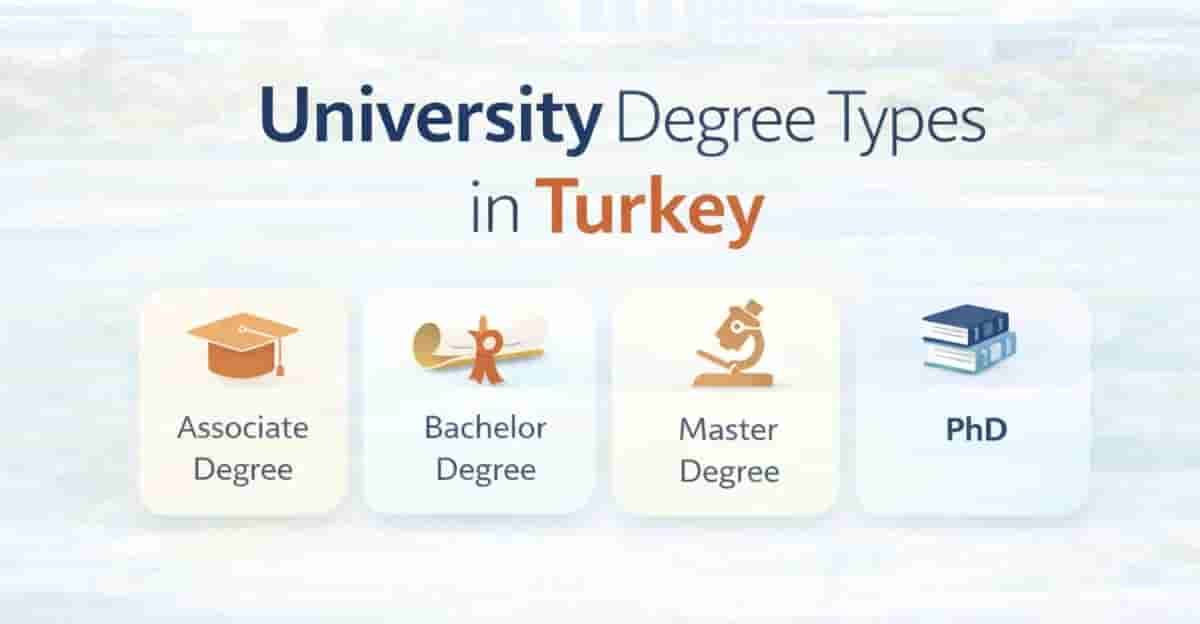
Application requirements vary by degree level. Universities evaluate candidates based on prior academic qualifications and identity verification documents.
Associate and bachelor applicants submit secondary education records.
Master’s applicants provide undergraduate academic credentials.
PhD applicants present both bachelor’s and master’s academic documentation.
Preparing documents early ensures a smoother and faster evaluation process.

English-medium programs require proficiency in English, while Turkish programs may require basic Turkish or preparatory courses. Students should review university-specific language expectations. Preparing in advance allows smooth integration into academic life, especially for intensive programs or courses with high communication demands.
Graduates from higher ranked universities often benefit from stronger employer recognition. Many institutions provide:
• Internship partnerships
• Career centers
• Industry collaborations
Rankings frequently correlate with graduate employability. This supports long term career planning.
StudyLeo supports free application processing, document organization, and program selection aligned with rankings. Students can modify preferences without additional service fees. Structured guidance reduces risk and improves decision clarity.
Studying in Turkey through a rankings based approach transforms guesswork into structured evaluation. When quality, cost, readiness, and career goals are aligned, universities offer strong academic value and international mobility.
Frequently Asked Questions and Answers
Look out blogs and aware of the latest trends and updates
Explore top universities offering quality education, modern facilities, and diverse academic opportunities for students worldwide





 Dormitory
Ankara, Turkey
 Dormitory
Istanbul, Turkey
 Dormitory
Istanbul, Turkey
 Dormitory
Istanbul, Turkey
 Dormitory
Istanbul, Turkey
 Dormitory
Istanbul, Turkey
 Dormitory
Istanbul, Turkey
 Dormitory
Istanbul, Turkey
 Dormitory
Istanbul, Turkey
 Dormitory
Istanbul, Turkey
 Dormitory
Istanbul, Turkey
 Dormitory
Istanbul, Turkey
 Dormitory
Istanbul, Turkey
 Dormitory
Istanbul, Turkey
 Dormitory
Istanbul, Turkey
 Dormitory
Istanbul, Turkey
 Dormitory
Antalya, Turkey
 Dormitory
Istanbul, Turkey
 Dormitory
Ankara, Turkey
 Dormitory
Istanbul, Turkey